With the Norfolk County mayoral debate coming up on Tuesday, October 13th, we’ve reached out to each of the candidates to hear more about their background, why they decided to run, and the issues they would like to address if elected.
Over the coming days, we’ll be featuring the candidates who have joined us in the studio, giving each an opportunity to speak about their campaign and their vision for Norfolk County.
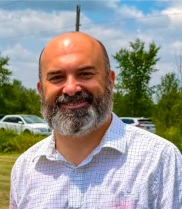
Current Ward 6 Councillor and Deputy Mayor Adam Veri says encouragement from residents across Norfolk County, combined with concerns about the municipality’s long-term future, convinced him to enter the mayoral race.
Veri says he initially had not planned to run for mayor, but began receiving encouragement from residents in a number of different wards who told him they wanted to see him seek the position.
He says he also became increasingly concerned about the tone of the election and the possibility of a campaign built around anger or promises to simply “fix” everything once a candidate takes office.
Veri says his approach is to focus on facts, provide residents with information and encourage collaboration, rather than trying to win support by appealing to people’s emotions.
Another factor in his decision was his experience coaching young people.
He says he has watched players he coached grow up and leave Norfolk County for education and careers because the local economy does not always provide opportunities that match their interests and expectations.
He says he wants to make decisions now that will improve the county’s financial position for the next generation.
Veri points to Norfolk County’s capital deficit, which he says is between $30 million and $33 million, and a 10-year plan intended to address it.
He says sticking to that plan could put the county in a much stronger financial position by the time the young people he currently coaches are entering the workforce and starting families.
Affordability is one of Veri’s three main priorities if elected.
He says addressing the county’s financial challenges will require difficult choices, including reviewing municipal services to determine where efficiencies can be found and which services residents consider priorities.
Veri says he would like to undertake a municipal service review, potentially examining one major service area each year of a four-year term.
He says the process would include public consultation and would examine whether services could be delivered more efficiently, shared with another municipality or organization, reduced or, where necessary, eliminated.
Veri says the process could also improve communication with residents by providing clearer information about what individual services cost, what they provide and how they are delivered.
He says water infrastructure is a particularly difficult affordability issue because water and wastewater infrastructure must be funded through water-related revenues.
Veri says Norfolk County faces significant infrastructure needs, including aging pipes, treatment facilities and other water and wastewater infrastructure.
He says adding more users to the system through development is one potential way to spread those infrastructure costs across a larger number of water customers, while provincial or federal funding could also play a role.
Economic development is Veri’s second major priority.
He says attracting more commercial and industrial investment is about more than creating jobs or increasing the tax base.
He supports Norfolk County’s recently established municipal development corporations, which he says can help separate economic development and business decisions from day-to-day political considerations.
Veri says the county’s industrial land should be developed and that attracting more commercial and industrial assessment could help reduce the tax burden on residential property owners over time.
His third priority is developing a municipal plan for downtowns in Norfolk – starting with Simcoe.
Veri says he believes downtown Simcoe should be viewed as a Norfolk County issue rather than solely a Simcoe issue.
He says the county should take a more proactive approach to the challenges facing the downtown, including examining social services, economic development and preventative measures rather than simply responding to problems as they arise.
Veri says he would begin the process early in a first term by consulting residents and community groups, asking what they believe the downtown needs and what solutions they would be willing to help develop.
He says the goal would be to create a plan within roughly a year and begin implementing it in the second year, while recognizing that some issues would require provincial or outside support.
Another major issue for Veri is the province’s strong-mayor powers.
He says he is concerned about the ability of a mayor to override council decisions in certain circumstances and about the mayor’s ability to hire and fire staff.
Veri says he would not use those strong-mayor powers if elected, arguing that municipal government should continue to rely on council debate, staff providing impartial information and majority decisions.
He says concentrating too much power in one office risks diminishing the voices of councillors and, by extension, the residents they represent.
Veri says his goal as mayor would be to provide what he describes as a wider county-wide perspective, while making decisions based on facts, financial realities and the long-term interests of Norfolk County.
