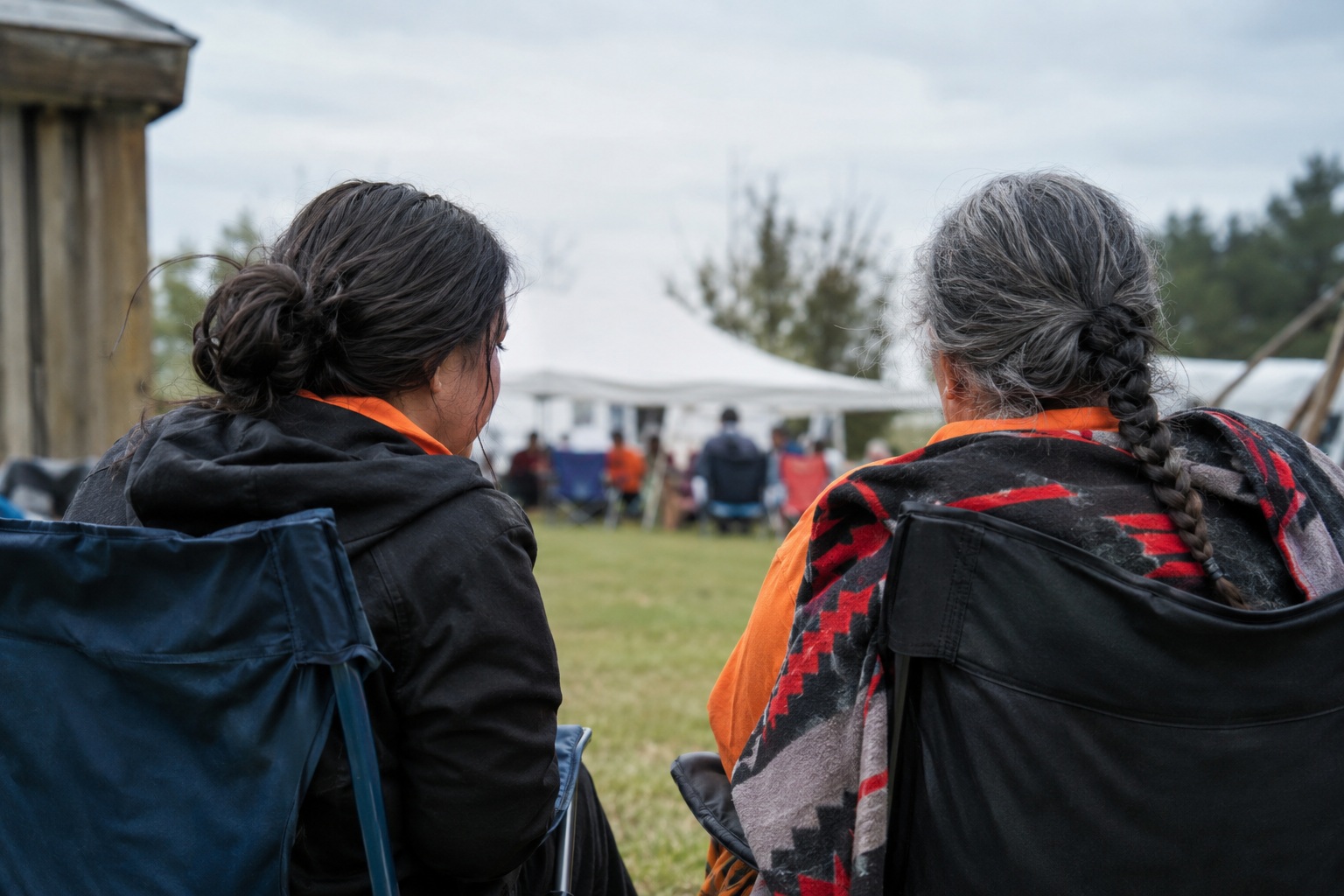
September 30 marks the National Day for Truth and Reconciliation and Orange Shirt Day, a day to honour residential school Survivors, remember the children who never returned home, and recognize the lasting impact of the residential school system on Indigenous Peoples, families and communities.
For Alderville First Nation Chief Taynar Simpson, listening to the experiences of Survivors is an important part of observing the day.
Simpson says listening to Survivors can help people better understand the history behind the residential school system and its continuing effects.
That understanding, he says, is also connected to reconciliation and the relationship between Indigenous Peoples and Canada.
Treaties are another important part of that understanding, Simpson says.
The National Day for Truth and Reconciliation takes place each year on September 30. The day was established in response to Call to Action 80 from the Truth and Reconciliation Commission, which called for a statutory holiday to honour residential school Survivors, their families and communities, and to ensure the history and legacy of residential schools remains part of public commemoration.
The day coincides with Orange Shirt Day, which began in Williams Lake, British Columbia, in 2013. The orange shirt has become a symbol of the loss of culture, freedom and self-esteem experienced by many Indigenous children who were forced to attend residential schools.
The message associated with the day is Every Child Matters.
The federal government says public commemoration provides an opportunity for Canadians to learn about the history and legacy of residential schools and reflect on the ongoing journey toward reconciliation.
Remembering the children and listening to Survivors
Residential schools were part of policies that removed Indigenous children from their families and communities. The impacts of that system continue to be felt by generations of First Nations, Inuit and Métis Peoples.
The Truth and Reconciliation Commission operated from 2008 to 2015, providing an opportunity for people affected by the residential school system to share their experiences.
The Commission’s final report included 94 Calls to Action, with Call to Action 80 specifically calling for a National Day for Truth and Reconciliation.
The National Day became a federal statutory holiday in 2021.
Five years after the first National Day for Truth and Reconciliation, the focus remains on remembering the children who did not return home, honouring Survivors and learning from their experiences.
For Simpson, that includes taking the time to listen.
Understanding the history is an important part of moving forward, while learning about treaties and the relationship between Indigenous Peoples and Canada is part of the broader work of reconciliation.
Alderville First Nation is also marking the day with an Every Child Matters walk.
The First Nation has invited community members to gather Wednesday morning before walking from its Health and Social Services building to the Alderville First Nation Community Centre.
Support available
The subject of residential schools can be difficult and may bring back painful memories for Survivors and their families.
A 24-hour support line for residential school Survivors and their families is available at 1-866-925-4419. The service provides crisis referral services and information about accessing additional health supports.
The Hope for Wellness Help Line also provides immediate, culturally safe crisis intervention support to First Nations, Inuit and Métis people.
It is available 24 hours a day, seven days a week, at 1-855-242-3310, as well as through online chat at Hope for Wellness.
Support is available in English and French, with Cree, Ojibway and Inuktitut available upon request.
A day of learning and reflection
Communities across Canada are marking the National Day for Truth and Reconciliation through ceremonies, walks, educational programs and other gatherings.
The federal government has published a list of activities taking place across the country, including events organized by First Nations and Indigenous organizations.
September 30 is intended to be more than a day of remembrance. The federal government describes it as an opportunity to learn, reflect and participate in activities that recognize the history and ongoing legacy of residential schools.
For Simpson, listening to Survivors and learning that history is an important part of that process — and understanding treaties and the relationship between Indigenous Peoples and Canada is another step toward reconciliation.
