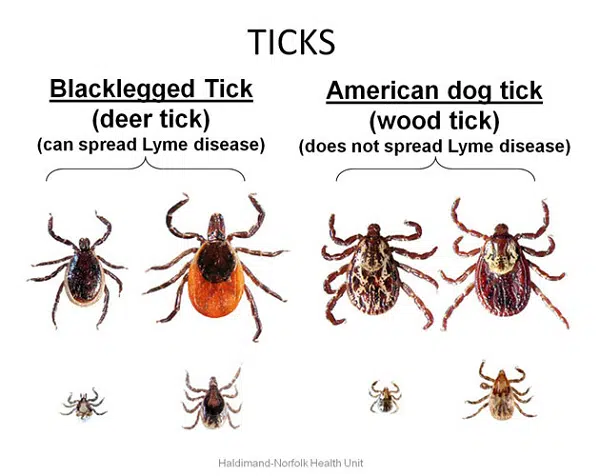
Grand Erie Public Health is warning residents that tick activity is increasing across the region as warmer weather sets in, raising concerns about the spread of tick-borne illnesses.
Officials say blacklegged ticks—also known as deer ticks—can carry Lyme disease, an infection that can be treated with antibiotics if caught early.
However, not all ticks carry the disease, and the risk can be reduced by taking proper precautions when spending time outdoors.
Residents are being encouraged to wear long-sleeved clothing, use insect repellent containing DEET or Icaridin, and perform full-body tick checks after being outside. Showering within two hours of outdoor activity can also help reduce the risk of ticks attaching to the skin.
Public health officials are also reminding residents to carefully remove ticks using tweezers, pulling straight out from the skin, and to monitor for symptoms such as fever, rash, or muscle aches. Anyone experiencing symptoms after a tick bite is advised to seek medical attention.
In addition to Lyme disease, officials are highlighting concerns about Rocky Mountain Spotted Fever, a potentially serious illness that has been detected in pets that visited the Long Point area. Without early treatment, the disease can be life-threatening for both humans and animals.
Residents are also encouraged to reduce tick habitats around their homes by keeping grass short, removing leaf litter, and creating barriers between wooded areas and lawns. More information, including how to report tick encounters, is available through public health resources online.
