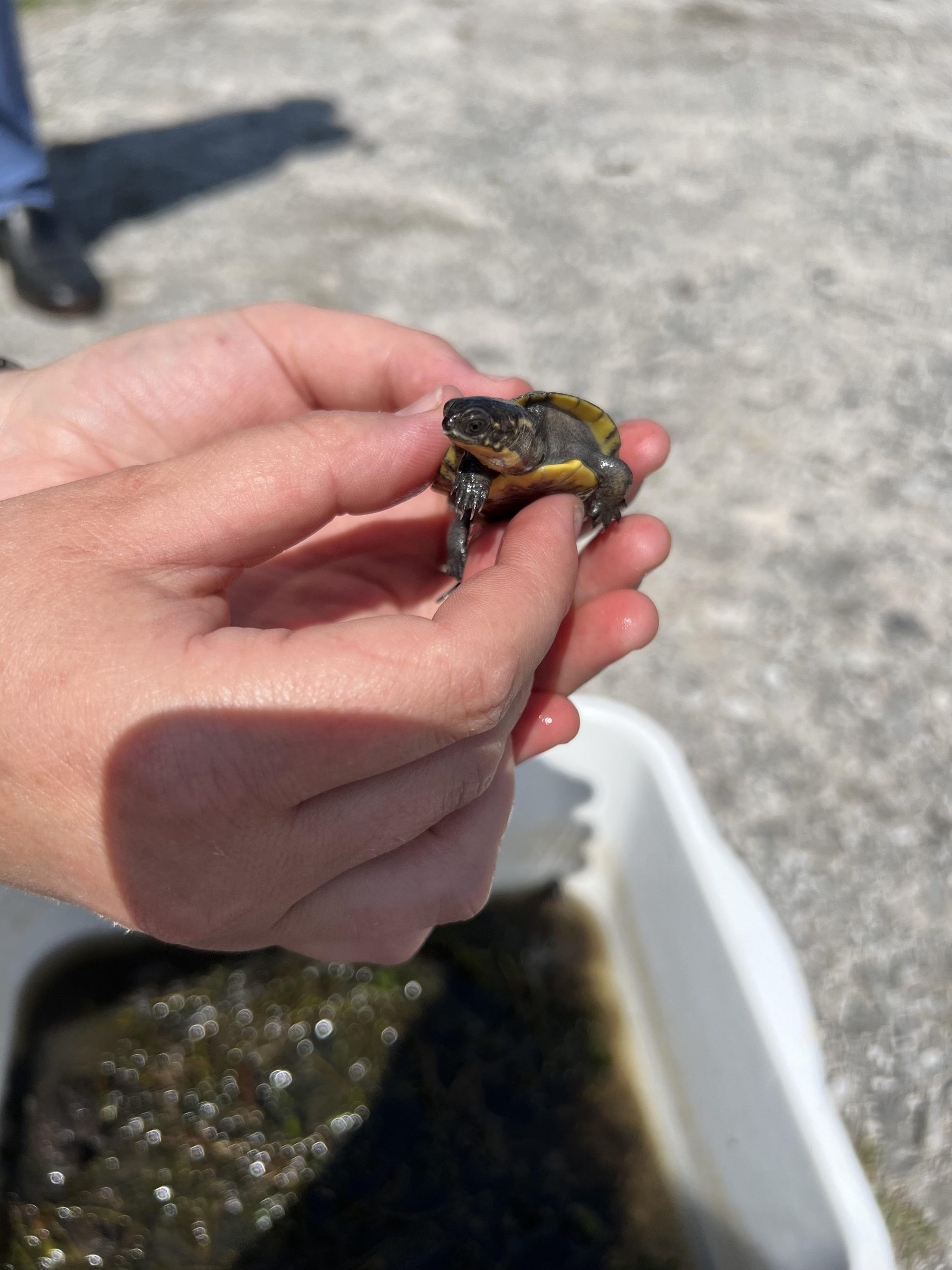
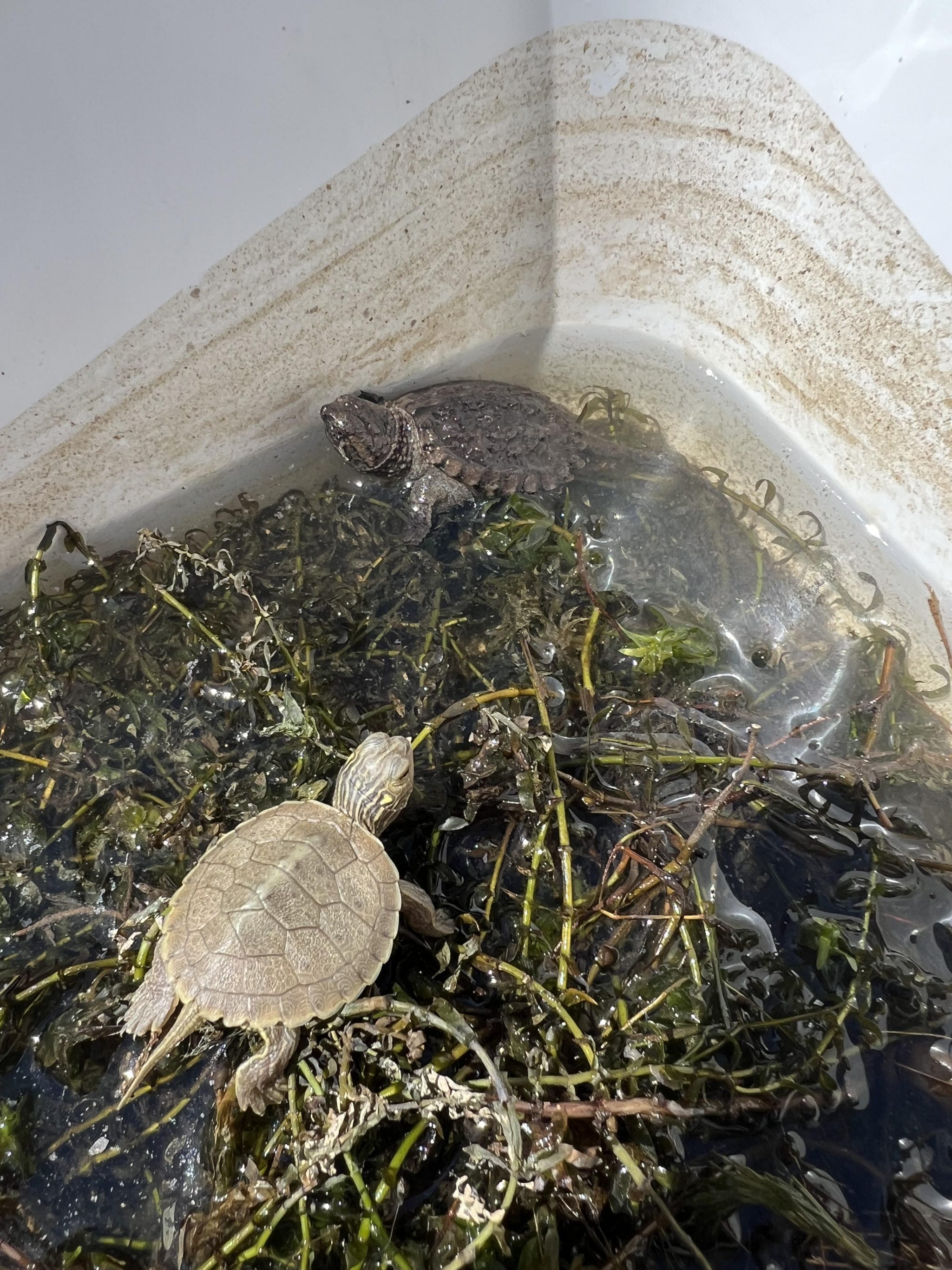
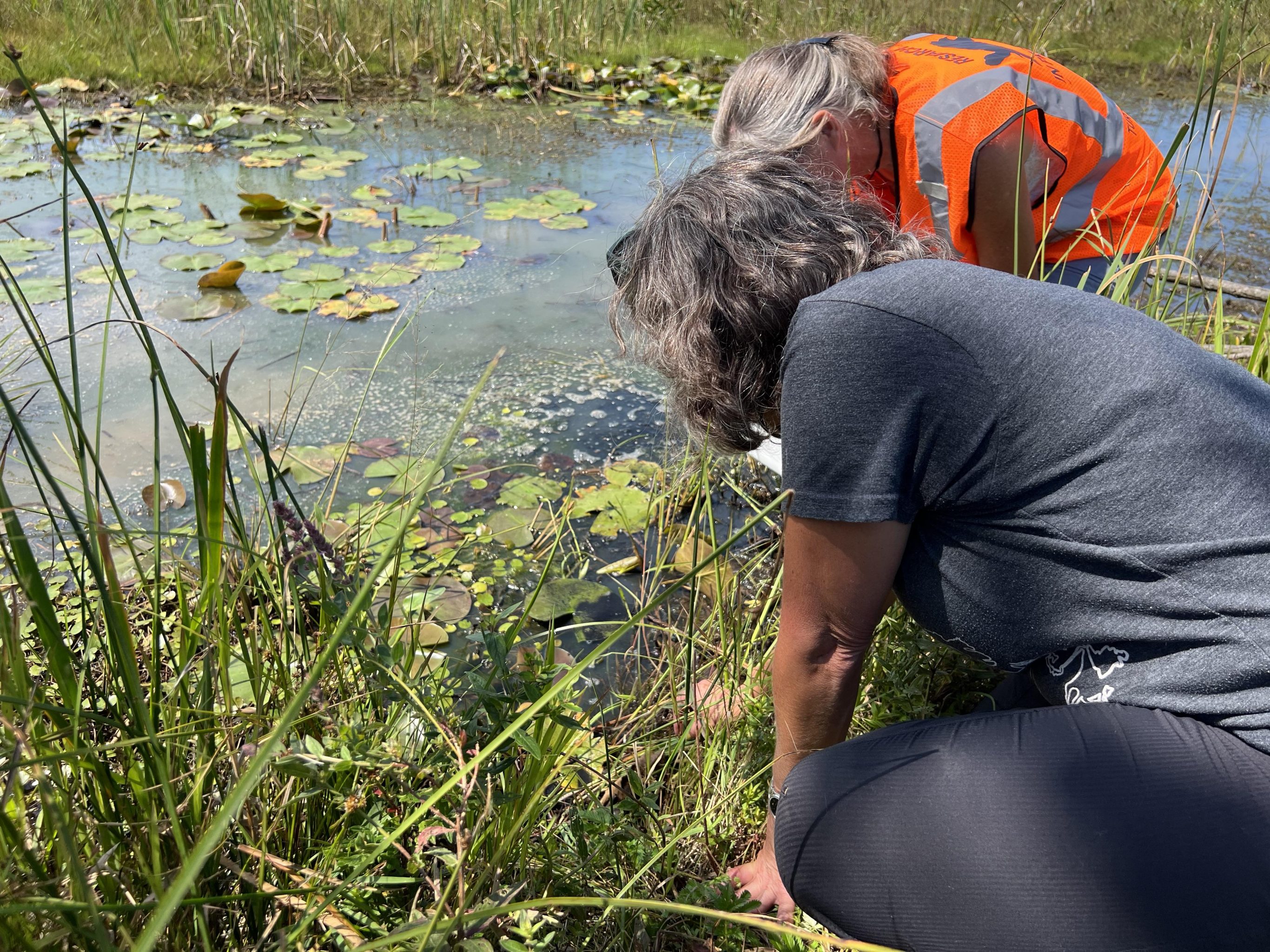
Baby turtles found their new home during a funding announcement at the Long Point Walsingham Forest Priority Place on Tuesday.
Parliamentary Secretary to the Minister of Environment and Climate Change, Julie Dabrusin, spent the day with partners at the Long Point Biosphere Region and Birds Canada to learn about what is happening in Norfolk County as she announced the Government of Canada is investing over $4.8 million from Canada’s Enhanced Nature Legacy to support a variety of partners in improving biodiversity benefits.
While releasing the turtles, Dabrusin spoke about what she had learned so far while visiting Norfolk.
She also expressed her excitement about helping baby turtles find a safe space to grow.
Tom Via, chair of the Long Point Biosphere Reserve Foundation, explained what the day was about for them.
He said if you don’t know about the work they do at the Bioshpere, there is one thing he’d like you to know.
The full list of investments includes:
· $405K for the Long Point Biosphere Region to reduce threats to amphibians and reptiles and coordinate outreach initiatives for a variety of conservation partners in the Long Point Walsingham Forest Priority Place.
· $367K for Birds Canada to monitor targeted species at risk birds and collaborate with landowners to implement Beneficial Management Practices to maintain forest habitat.
· $2 million for several conservation partners, including the Nature Conservancy of Canada, to manage invasive species, such as the common reed (Phragmites australis), across the landscape in targeted species at risk habitats.
· $552K for the Long Point Basin Land Trust, and several conservation partners, to improve forests and treed swamps habitats for species at risk.
· $150K for the University of Waterloo, to monitor plant species at risk in the Long Point area wetlands, particularly to assess recovery in areas where the common reed (Phragmites australis) has been managed.
· $400K for ALUS Norfolk, and several conservation partners, to collaborate with landowners to restore, improve, and protect habitat on agricultural land.
· $700K for the Nature Conservancy of Canada, and several conservation partners, to improve and restore Open Country habitat for grassland species at risk.